Prevent Wastewater Problems with Septic Maintenance Lakewood CO
What Lakewood-area property owners should know about septic pumping schedules, OWTS records, and maintenance planning.
There is no universal pumping schedule for every septic system. The appropriate interval depends on tank size, household occupancy, water use, garbage-disposal use, accumulated solids, system design, and whether pumps, alarms, or other mechanical components are installed. EPA guidance recommends that septic systems generally be inspected every three years and pumped as needed—commonly every three to five years for many household systems.
Jefferson County uses the term OWTS for onsite wastewater treatment systems. If a home is being sold, an eligible property may require pumping, inspection, and a county use permit before transfer. Confirm the current property-specific process, timing, and inspector requirements with Jefferson County before a closing.
| Maintenance Task | Description | Typical Timing | Compliance / Property Impact |
|---|---|---|---|
| Visual system review | Looks for damaged lids, alarm concerns, wet soil, odors, and visible plumbing symptoms | During scheduled visits or when concerns arise | Helps identify visible risks early |
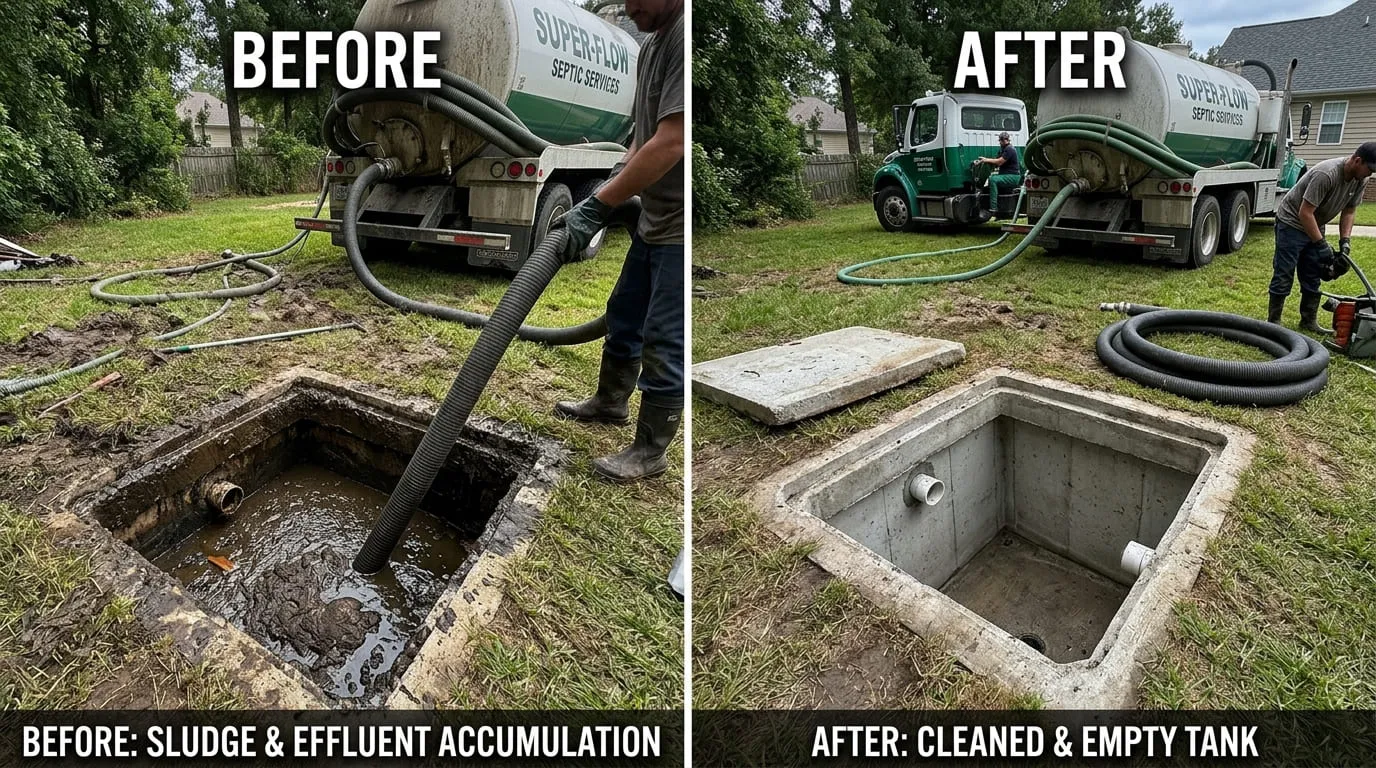
| Septic tank pumping | Removes accumulated sludge, scum, and wastewater solids | Based on usage, tank size, system records, and findings | Helps reduce solids carryover beyond the tank |
| Baffle / tee review | Reviews accessible inlet and outlet components within the approved service scope | During pumping or system review | Supports normal flow and solids separation |
| Effluent-filter attention | Reviews or cleans an accessible filter where present | According to system needs | Can help protect downstream components |
| Pump and alarm review | Assesses pump-tank, float-switch, and alarm concerns | More frequently for mechanical systems | Helps identify mechanical issues early |
| Service documentation | Provides available records and recommendations after completed work | After service | Supports property files and future maintenance planning |
Schedule septic service ahead of holidays, visitors, seasonal property use, and potential real-estate transactions.
Retain pumping records, OWTS documents, inspection reports, and repair invoices with property records.
Repair leaking toilets, faucets, and plumbing pipes promptly to limit unnecessary hydraulic loading on the system.
Spread out laundry loads and other high-water activities to reduce strain on the tank and absorption bed.
Frequency Note
The right interval can vary significantly. A heavily occupied home with a smaller tank may need pumping earlier than a larger, lightly used system. Use records, professional findings, and property conditions—not a generic calendar promise—to determine your schedule.
Cost Range Note
Septic pumping cost in Lakewood can vary based on tank capacity, number of compartments, lid accessibility, excavation needs, vehicle access, pumping volume, emergency response timing, documentation needs, and related plumbing or repair work.
- Keep tank access lids and risers visible, safe, and reasonably accessible when possible.
- Do not flush wipes, grease, medications, coffee grounds, paper towels, cat litter, or other non-septic-safe materials.
- Ask whether both compartments will be addressed when a property has a two-compartment tank.